
Choosing a learning environment for your child is an important decision that can influence how they approach education, relationships, independence, and new experiences. Every child develops at a different pace and has their own personality, interests, strengths, and needs. As a result, there is no single educational setting that will be the perfect fit for every family. Parents may need to consider several options before finding an environment where their child feels comfortable, supported, and encouraged to grow.
The right setting should provide more than academic instruction. Children spend a significant amount of time in educational and care environments, so parents should consider how those settings support emotional, social, and physical development. A positive environment can give children opportunities to practice communication, build friendships, solve problems, develop independence, and discover interests they may carry throughout their education.
By taking time to understand the choices available, parents can make a thoughtful decision based on their child’s development and their family’s needs. The goal is not simply to find an impressive program, but to find a setting where a child can learn, feel secure, build confidence, and develop the skills they need for the next stage of life.
Considering Your Child’s Daily Schedule and Needs

A child’s daily schedule can affect their ability to participate comfortably in learning and other activities. Younger children often benefit from predictable routines that balance structured instruction, play, meals, rest, social interaction, and transitions. Parents should consider how a potential program fits into the child’s rhythm and the family’s schedule.
Full-day preschool programs can be particularly useful for families who need coverage throughout much of the workday. However, the number of hours alone should not determine the decision. Parents should ask how the day is organized and whether children have opportunities to move between different types of activities.
A well-designed schedule should allow children to engage in age-appropriate learning without making the entire day feel academically demanding. Young children need time to play, explore, communicate with peers, and practice skills independently. These experiences complement structured activities and support development in important ways.
Parents should also consider how their child handles transitions. Some children move easily between activities, while others need additional preparation and consistency. Asking educators about their approach to transitions can help determine whether the environment suits the child.
Understanding What to Look for in an Early Learning Program
The early learning years provide children with foundational skills that can support future education. When evaluating a preschool setting, parents should look beyond worksheets and academic lessons. Social development, communication, creativity, problem-solving, and independence are all important.
Strong programs use activities appropriate for children’s ages and developmental stages. Young children often learn through hands-on experiences, stories, games, music, movement, art, and guided exploration. These activities can help children practice concepts while keeping learning engaging.
The classroom environment can also provide valuable information. Look for spaces that are clean, organized, welcoming, and designed with children in mind. Materials should be accessible, and children should have opportunities to make choices and participate in activities.
Teacher-child interactions deserve close attention. Educators should communicate with children respectfully and patiently. During a visit, observe whether teachers listen to children, encourage questions, provide guidance, and recognize individual differences.
Parents should also ask how progress is monitored and communicated. Regular communication allows families to celebrate progress while addressing concerns early. Before enrolling, ask about class sizes, teacher qualifications, safety policies, daily schedules, and family involvement.
Evaluating Care Options That Fit Your Family’s Routine
Educational decisions are closely connected to family logistics. Parents may need a childcare service that works with employment schedules, commuting requirements, appointments, and other responsibilities. Finding an option that fits the family’s routine can reduce stress and create consistency for the child.
Start by identifying the hours of care the family actually needs. Location is another consideration. A setting close to home or work may simplify drop-off and pickup, while transportation arrangements should be considered if someone else may need to pick up the child.
Families should ask about holidays, closures, sick days, late pickups, meals, communication, and emergency procedures. These details can reveal whether an arrangement will be practical over the long term.
The quality of care matters just as much as convenience. Look for caregivers who provide attentive supervision, communicate respectfully, and understand children’s developmental needs. Parents should also ask how caregivers handle challenging behavior. A thoughtful approach should emphasize guidance and age-appropriate boundaries.
Finding a Nurturing Start for Your Youngest Child

Choosing infant care services requires careful consideration. Feeding, sleep, diapering, physical comfort, and responsive interaction are central parts of an infant’s day. Parents should look for caregivers who understand these needs and provide consistent attention.
One of the first things to evaluate is caregiver responsiveness. Babies communicate through crying, facial expressions, movement, and sounds. Attentive caregivers should recognize these cues and respond appropriately.
Parents should ask about feeding arrangements, including how bottles or prepared food are stored, labeled, and provided. Sleep practices deserve particular attention as well. Ask where infants sleep, how routines are managed, and what safety procedures are followed.
Cleanliness and hygiene are also important. Infants frequently explore their surroundings with their hands and mouths, so appropriate cleaning procedures can help maintain a healthy environment.
Talking, singing, reading, making eye contact, and responding to babies’ sounds can encourage early communication and social development. Parents should also consider caregiver consistency. Familiar adults who understand a baby’s routines can help create a sense of security.
Exploring Ways to Build Community and Social Connections
Children benefit from opportunities to interact with people outside their immediate household. Community-based activities can help children practice communication, cooperation, empathy, and confidence while giving families opportunities to connect with others.
For families who participate in faith communities, sunday school for kids can provide another setting for social and personal development. Activities may include stories, group discussions, music, crafts, games, and age-appropriate lessons.
Parents should consider whether an activity aligns with their family’s values and expectations. Ask about the structure, supervision, age groups, schedules, and activities before enrolling.
Social opportunities do not need to be highly structured to be beneficial. Community events, recreational activities, neighborhood programs, and group classes can all help children interact with peers and adults.
Parents should also pay attention to how their child responds to group activities. Some children quickly enjoy social settings, while others may initially be hesitant. A supportive environment can give children time to become comfortable.
Choosing a Child-Centered Approach to Early Education
Some parents are drawn to educational approaches that emphasize independence, hands-on learning, and individual development. A montessori preschool is one example that encourages children to learn through purposeful activities and exploration.
Classrooms are often designed to allow children to interact with materials independently, while educators guide rather than direct every activity. This can give children opportunities to practice concentration, decision-making, coordination, and problem-solving.
Parents considering this approach should learn how the specific school applies its educational philosophy. Programs can differ, so ask about classroom structure, teacher training, age groupings, daily activities, and individual progress.
It is also useful to consider the child’s personality. Some children enjoy choosing activities and working independently, while others prefer more direct instruction. Neither preference is inherently better. The important consideration is whether the environment provides appropriate support.
Knowing When to Seek Support for Your Child’s Educational Rights
Some children require additional support to access education effectively. When a child has a disability or developmental difference that affects their educational experience, parents may need to understand their rights and the processes available to request appropriate services.
Educational systems can involve specialized terminology, evaluations, plans, meetings, and documentation. Parents who are unfamiliar with these processes may find them difficult to navigate. Learning about procedures and asking questions can help families participate more confidently.
In some situations, families may benefit from consulting a special education attorney. An attorney with experience in this area can help parents understand applicable educational rights, review documents, explain procedures, and provide guidance when disagreements arise.
Seeking legal guidance does not necessarily mean that a dispute will occur. Some families simply want help understanding their options before making an important decision.
Parents should keep records of evaluations, school communications, meetings, and relevant educational documents. If concerns arise, qualified advice can help clarify available options while keeping the child’s educational needs at the center of the process.
Preparing for the Transition to the Middle School Years
The transition from elementary school to middle school can bring significant changes. Students may have multiple teachers, more complex assignments, changing schedules, and greater expectations for independence. Parents can help make this transition easier by preparing children gradually.
When comparing private middle schools, families should consider academic programs, extracurricular opportunities, class sizes, student support, communication, and overall school culture. A school that looks strong academically may not necessarily be the best fit for every child.
Parents should ask how the school supports new students, explains schedules, and provides help when students need it. Academic expectations are another consideration. Children may need to become more responsible for tracking assignments, preparing for tests, and organizing materials.
Social development also matters. Middle school students are navigating changing friendships and greater social awareness. A supportive environment should provide appropriate guidance and opportunities for positive peer relationships.
Planning Ahead for a College-Focused High School Experience
High school introduces additional considerations for families thinking about long-term educational goals. Students may begin exploring career interests, advanced coursework, extracurricular activities, and future college plans.
A private college preparatory high school can appeal to families seeking a structured academic experience with an emphasis on preparing students for postsecondary education. However, parents should look beyond the school’s name and examine the actual opportunities available.
Course offerings are important. Ask about honors classes, advanced courses, academic support, electives, and opportunities to pursue subjects that interest the student. College guidance can also be valuable. Families should ask how counselors work with students and what resources are available for researching colleges and preparing applications.
Extracurricular activities can help students develop leadership, teamwork, communication, and time-management skills. Parents should also consider whether the environment matches the child’s academic and personal needs. A highly competitive setting may motivate some students while creating unnecessary stress for others.
Balancing Learning, Recreation, and Fun During School Breaks
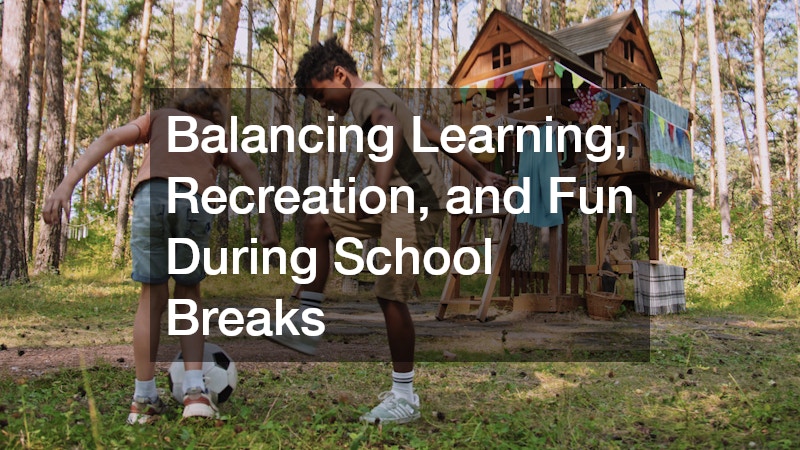
School breaks can provide children with a valuable change of pace. While learning should not stop entirely, children also need opportunities to relax, play, explore interests, and spend time with friends and family.
Summer programs can be helpful for families seeking structured activities during longer school breaks. A well-designed summer camp can combine recreation with social interaction, creativity, physical activity, and skill development.
When evaluating a camp, consider the child’s age and interests. Some children may enjoy sports and outdoor activities, while others may prefer art, science, technology, music, or imaginative play.
Safety should be a central consideration. Parents should ask about supervision, staff qualifications, emergency procedures, transportation, water activities, and illness policies.
The schedule matters, too. Some children thrive with busy days, while others may become overwhelmed by too many activities. Social opportunities can help children meet peers and develop communication, teamwork, and problem-solving skills.
Children also need unstructured time. Reading, playing outside, visiting family, or simply relaxing can support creativity and independence. The best summer experience often creates a healthy balance between structure and freedom.
Choosing the right learning environment is ultimately about understanding the whole child rather than focusing on a single educational feature. Academic quality is important, but so are emotional security, social opportunities, independence, communication, and the ability to learn at an appropriate pace. Parents who consider these factors can make decisions that support both their child’s current needs and future development.
Every stage of childhood may require a different approach. An infant needs responsive care and predictable routines, while a preschooler may benefit from opportunities to explore, play, communicate, and develop independence. Older students may need increasing academic challenges, specialized support, extracurricular activities, and guidance as they prepare for future goals.
Most importantly, choosing an educational environment is not about finding perfection. Children grow, change, and discover new interests. Their needs may evolve, and families may need to reassess their options over time. With thoughtful planning, open communication, and attention to each child’s individual strengths and needs, parents can create an educational path that encourages curiosity, confidence, resilience, and a lifelong willingness to learn.